
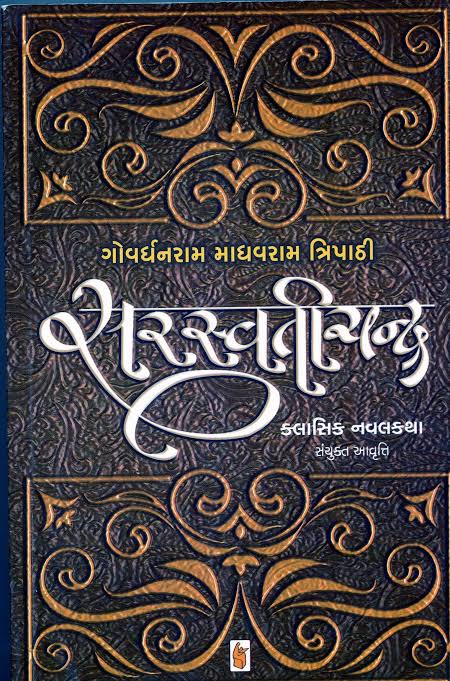
My first encounter with the concept of "rejecting girls without seeing them" was when I binge-watched the "Saraswatichandra Series" which was directed by Sanjay Leela Bhansali and telecasted on Starplus channel. There was an episode where Saraswatichandra a male protagonist rejects Kumudsundari a female protagonist without seeing her. Later he eventually falls in love with her. That's the way the 'Saraswatichandra Series' story goes around. According to the series, firstly Saraswatichandra wanted to abandon the materialistic life that's why he automatically rejected Kumudsundari without seeing her in person. That episode was not authentic enough to add some sense and adds a question that 'Couldn't he do these two activities together? Couldn't he live two lives together? The 'Saraswatichandra Series' was inspired by Gujarati novelist Govardhan Ram Tripathi highly famous novel "Saraswatichandradra" which doesn't mention the idea of 'Saraswatichandra rejected Kumudsundari without seeing her in person' but Tripathi's story also tells us that he abandoned Kumudsundari on the day when the marriage was fixed for his aesthetic practices and Kumudsundari was married to Paramdhan later. That means Saraswatichandra didn't automatically reject her without seeing her. Thus series provokes the inkling that it's civil to reject a girl without seeing her looks and intellectual ability or something unique. And the novel stimulated the impression that's it's okay for the groom to leave his bride during the marriage ceremony to whom he is going to be married for his aesthetic penance practices.

Another encounter was when I read Buddha story in M. C. Dey's 'My Pilgrimages to Ajanta and Bagh Caves' novel were again the idea of 'Siddharth (Gautam Buddha) abandoning his wife Yashodhara for his aesthetic practices and to become a teacher of the world' came into life. This reveals how abandoning wife, bride and girl become common and aesthetic practices performed by men looked more like a reason than an excuse in society.

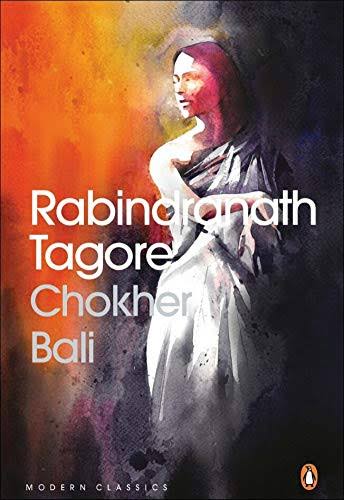
The third encounter when I read Nobel Prize vanquisher Rabindranath Tagore's novel "Chokher Bali" in which Mahendra a male protagonist firstly accepted to marry Binodini and then before 4 days of their marriage, Mahendra rejected highly qualified and highly educated Binodini without meeting her in person. According to the novel, Mahendra thought that if he would get married then he wouldn't be able to take care of his mother that's why he rejects Binodini but later marries Ashalata, a 15-year-old girl because Asha's parents died and Asha was illiterate. On the other hand, Binodini marries Bipin and Bipin dies within 6 months of their marriage and Binodini became a widow. When Binodini came to Mahendra's house, Mahendra falls in love with Binodini and tries to abandon Asha in the process. Binodini also rejects his love later because she had seen how Mahendra didn't care for his mother after marrying Asha. And Mahendra never asked Binodini about her childhood. No one had conquered Mahendra's heart like Binodini. It turns out to be the extramarital theme. First Mahendra rejected Binodini, then Mahendra abandons Asha for Binodini and finally, Binodini rejects Mahendra and went to Kashi. But, the "Stories by Rabindranath Tagore" series which was directed by Anurag Basu on the Epic channel didn't display Mahendra's character as an emotional one even though Mahendra is a very emotional character, not a manipulative one according to Tagore's novel. He was the outspoken male character in a story than Binodini. This again shows that not only men can reject women but also women can reject men. Thus rejection got intensified and its consequences too.
According to folklore,


Narayan (Saint Ramdas) Ramdas Swami or simply Ramdas was an Indian Hindu saint, philosopher, poet, writer and spiritual master during Maharaja Shivaji (Maratha Emperor) ruling period. His earlier name was Narayan. He was a devotee of the Hindu deities Lord Rama and Lord Hanuman. He fled away from his marriage when he heard the word 'Savadhan,' he got alerted and leave materialistic life and lead to spiritual life.

Tenali Rama was a poet, scholar, extraordinary advisor, thinker, minister and jester. He was an incredible Telugu phraseology poet and scholar of Sri Krishnadevaraya (Vijayanagar Emperor) (C.E. 1509 to 1529) court. He was from the region of Andhra Pradesh. Many folklores, folktales, novels, dance dramas, Television and Theatre dramas, paintings are focused on his wit, shrewdness, intelligence and his ability to trick people and get work done. He was one of the 8 poets of Krishnadevaraya's quadrangle.
It is believed that when he was a child his father was led to death.[clarification needed] To overcome the depression which Rama faced, his mother Lakṣamma took him to Vijayanagar where he became the 8th advisor of King's court.
Marriage with Sharda:
Tenali Rama too fled away from his marriage but later Rama returned home after 2 days of marriage and he married that bride. Thus, Sharda became his wife. And the couple had a child named Bhaskar.
Support our journalism by contributing to Scroll Ground Reporting Fund. We welcome your comments at letters@scroll.in.



Write a comment ...